

The Sloped Yard That Caused a Hidden Dining Room Leak
Home Inspection Case Study from Round Rock
Realtor Summary
The Issue: A reverse-sloping yard directed runoff toward the foundation, causing unseen exterior and interior dining room water damage.
The Solution: Our detailed inspection report gave the buyer concrete, photo-documented proof and full leverage during option period negotiations.
Service Package: State-compliant TREC 7-6 inspection + Wood-Destroying Insect (WDI) inspection ($610 total).
When your buyers are house hunting in Round Rock, it's easy for them to fall in love with the things they can see — high ceilings, a beautiful kitchen, walk-in closets, nearby parks, and the perfect neighborhood. (That’s why we live in Round Rock too!)
But some of the most important parts of a home aren't the things that make it into the listing photos. They're the things happening below their feet.
I recently ran a home inspection in Round Rock, TX on a two-story house built in 2004. From the street, the place looked fantastic. But when I got down to the ground level, I found a classic water intrusion chain reaction: a bad slope in the yard was quietly forcing water right into the house.
Catching these kinds of issues during your client’s Round Rock home inspection can make the difference between a smooth closing and an expensive surprise after move-in. Here is a quick look at exactly what I found.
The Root Cause: A Yard Sloping the Wrong Way
A broken dishwasher or damaged doorframe can be swapped out in a day (maybe an expensive day but still), but keeping water away from the foundation is a top priority in the Austin-area. The ground around a house is supposed to act like a slide, tilting downward so rainwater runs away from the concrete slab and out to the street.
On this property, the yard was doing the exact opposite. The dirt and flowerbeds next to the house were sloped toward the walls instead of away from them.
Around here, our Central Texas clay soil acts just like a giant sponge. When a yard slopes the wrong way, heavy rainstorms trap pools of water right up against the house's foundation instead of letting it drain out to the street.
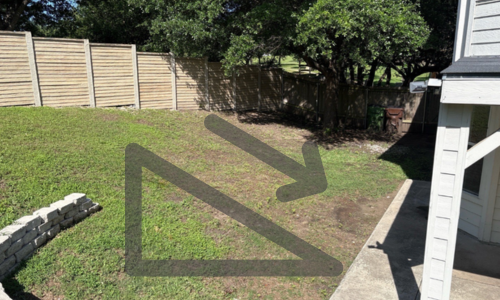
The Chain Reaction: Water Makes Its Way Inside
Water trapped against a house doesn't just sit there—it actively looks for any tiny gap to crawl through.
When I moved inside to inspect the front dining room, I pulled out my moisture meter to check the walls right next to that slanted outdoor area. Sure enough, the meter lit up; there was active water seeping into the wall.
The chain reaction was clear as day:
The yard sloped the wrong way.
Rainwater pooled against the foundation.
The water broke through the outside trim and framing.
Wood rot started outside, and the drywall inside started soaking up water.
Without a sharp home inspector catching this during the option period, a buyer would have signed the paperwork completely blind to a hidden leak and all the damage that comes with it.
Lawn Sprinklers are the Hidden Accelerator
Whenever I see a slanted yard paired with an indoor leak, there is usually a hidden culprit making things twice as bad: the lawn sprinkler system.
If you or your buyer have a gut feeling that something is off with the yard—maybe you notice a patch of grass right next to the house that looks abnormally green, the ground feels squishy under your feet, or the seller’s water bills seem shockingly high—you should absolutely add a sprinkler check to the inspection.
The Bottom Line for Real Estate Agents
A detailed inspection report can feel overwhelming for buyers, especially when they see issues like water intrusion or drainage concerns. That’s where a thorough inspection and clear communication make all the difference.
My job is not just to identify problems; it’s to explain what they mean, how serious they are, and what options your clients have before closing. In this case, identifying the drainage issue and active moisture intrusion gave the buyer valuable information they could use during negotiations, whether that meant requesting repairs, asking for credits, or simply moving forward with confidence.
The good news? Not every inspection finding is a deal breaker. Many issues, like improper drainage, can be corrected with the right repairs and maintenance. The key is finding them early, while your clients still have options.
When you’re representing buyers in Central Texas, partner with a home inspector who provides detailed findings, clear explanations, and the information your clients need to make confident decisions.
