

Hidden Fire Hazards and Energy Leaks in a New Construction Home
New build Inspection findings from Liberty Hill, TX
Realtor Summary
The Issue: On a brand-new 3,200 sq ft home, we found attic insulation resting against a hot exhaust flue (fire hazard) and unsealed ducts blowing cool air straight into a 120° attic.
The Takeaway: New builds aren't flawless. Catching this before closing gave the agent clear, photo-documented proof to get the builder's subs back out to fix both issues before key handoff.
Service Package: Standard TREC 7-6 home inspection; total Investment: $485
When buying new construction homes, like a spacious 3,200-square-foot build, it’s easy to assume everything under the roof is flawless. Buyers see fresh paint, spotless countertops, and that brand-new home smell, so it’s natural to think, "Why would I need to inspect something nobody has ever lived in?"
So first, a huge compliment to the agent and buyers of this property: choosing to get an independent inspection on a brand-new build is one of the smartest decisions you can make.
The reality of the housing market in Central Texas is that sub-contractors are moving fast. Even with the best intentions, oversights happen on fresh builds every single day. Catching these items before closing gives you total leverage to request builder repairs long before you sign on the dotted line. Armed with an independent, detailed report, you aren't just coming to the builder with a list of complaints—you're handing them a clear, photo-documented proof of exact code or safety issues that need fixing.
During a recent inspection of a new construction home in Liberty Hill, two major "hidden" issues hiding up in the attic really stood out. They are prime examples of why even brand-new builds need an experienced set of eyes before closing.
Fire Safety Hazards Identified
Attic insulation here in Central Texas has a big job to do. It’s the main shield keeping the cooling inside and preventing energy bills from skyrocketing during those brutal 100-degree summers that seem to stretch on forever. However, loose-fill blown insulation has to be installed correctly—and that means keeping it completely clear of heat-producing vents and exhaust flues.
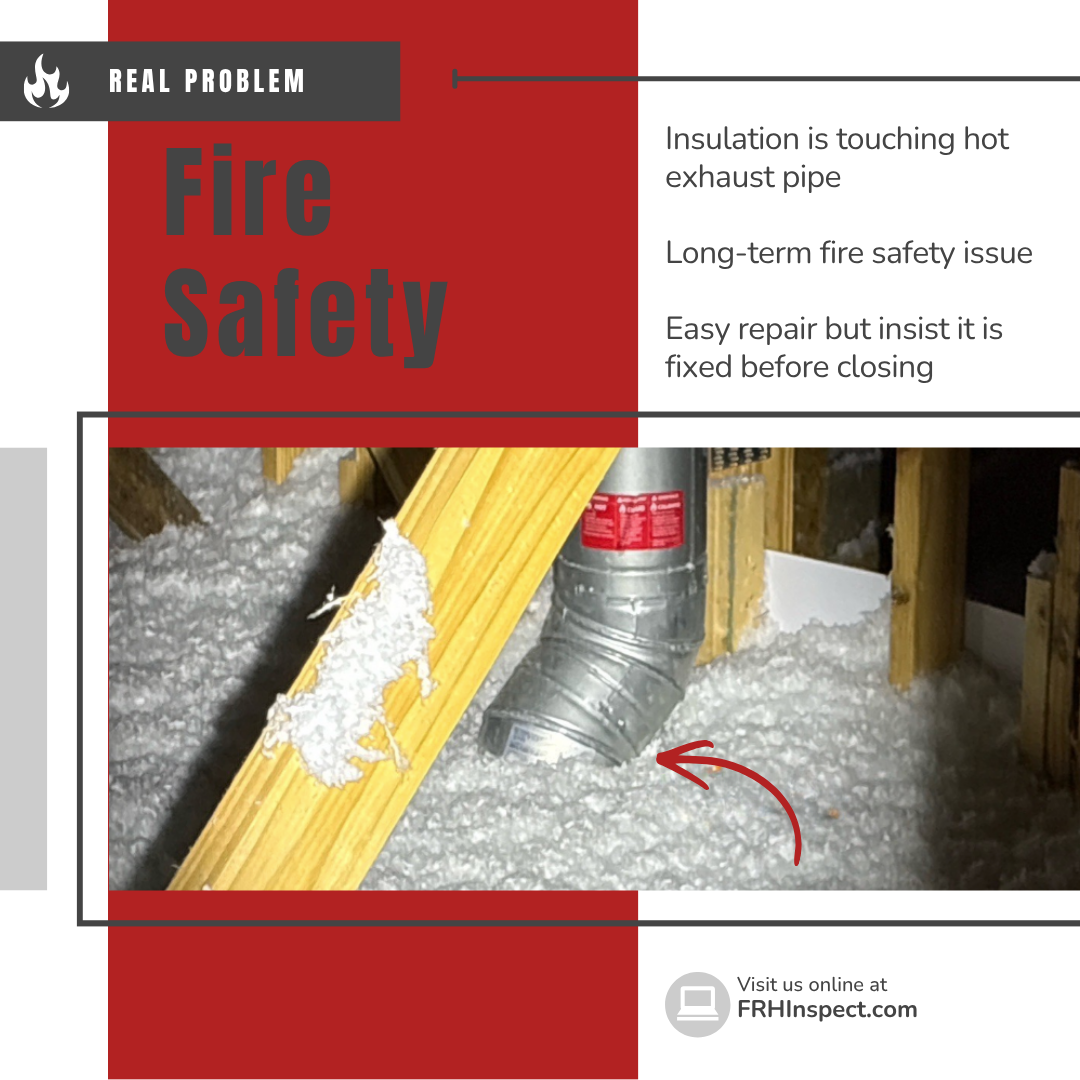
While crawling through the attic on this build, I found loose insulation resting directly against a scorching hot metal exhaust pipe.
Now, a lot of people might look at that and think it's no big deal. But over time, prolonged exposure to high surface temperatures creates a very real fire hazard right above your living space. As a firefighter-turned-inspector, safety is always my absolute top priority. Checking proper heat-source clearances in a dark, tight attic is a critical safety check that quick builder walkthroughs or cosmetic checklists miss almost every single time.
HVAC Duct Leaks & Energy Drain in Attic
When trying to cool a large home in Texas, the HVAC system is already working overtime. Every cubic foot of cold air counts.
Up in the attic, the air handler uses a specialized sealant called mastic tape to join ductwork together and keep all that chilled air inside the system. On the left air handling unit of this home, that mastic sealant had already separated and pulled apart. Instead of blowing ice-cold air into the bedrooms, the system was actively dumping conditioned air right into an unconditioned, 120-degree attic space. This is as bad as leaving the front door open; I can just hear my mom “are you trying to air condition the whole neighborhood!?”
Dumping your AC into the attic causes a domino effect of headaches:
Sky-high electric bills: Your thermostat never reaches its set temperature, forcing the unit to run continuously just to keep up.
Shortened equipment life: Forcing a brand-new compressor and fan motor to run nonstop puts years of wear and tear on the system in just a few months.
Moisture & mold risks: Blowing cold air into a hot attic creates condensation, leading to potential humidity imbalances, duct sweating, and moisture issues down the road.
Why New Construction Homes Still Need Detailed Reports Before Closing
Here’s the good news: neither of these findings required a massive structural overhaul or weeks of delay. They were simple, straightforward fixes—if you know they exist.
Because the agent and buyers scheduled the inspection before close, they didn't have to argue with the site supervisor. They were handed a detailed report complete with high-resolution photos, exact attic location tags, and plain-English descriptions of what needed to be corrected. Their project manager had the sub-contractors back out to fix the insulation framing and reseal the ductwork before the keys ever changed hands.
When helping buyers with new construction homes in Liberty Hill, Cedar Park, or anywhere across Central Texas, don't leave their biggest investment to chance. Never skip the independent home inspection!
