

Realtor Summary
The Issue: Inside a 1925 single-family home and its detached garage, active wood-destroying insect (WDI) activity, unsealed exterior gaps, and negative soil grading were silently compromising the structural framing and electrical systems.
The Takeaway: This client commissioned a professional WDI inspection—catching severe framing decay and electrical hazards before closing.
Service Package: CenTex Bundle with referring realtor discount, $684
When touring a historic property, most buyers fall in love with high ceilings, original hardwood, and neighborhood charm. Almost nobody looks at an exterior wall penetration or low-sloping dirt in the yard and thinks, "Is that subtle gap going to compromise our safety and structural framing?"
That is precisely why getting an independent, professional WDI inspection is one of the smartest moves a realtor and their buyer can make. Even in seemingly solid homes, destructive pests and hidden moisture issues.
During a recent inspection of an east Williamson County property featuring a 1925 pier-and-beam home, a cluster of environmental and structural vulnerabilities made it crystal clear why WDI checks are non-negotiable here in Central Texas.
Hazards Identified: Pest Intrusion, Moisture & Electrical Risks
Wood-destroying insects, especially subterranean termites, thrive on moisture and dark, unventilated spaces. Left unchecked, they hollow out structural timber and degrade building components from the inside out.
While evaluating the property, several critical vulnerabilities came to light:
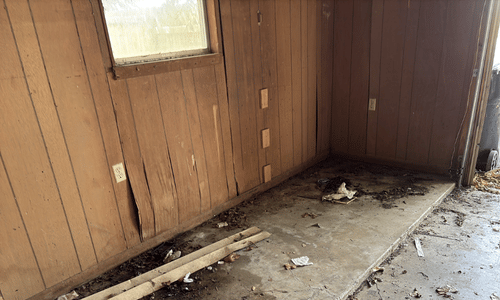
Severe Framing Deterioration: The interior walls of the detached garage were in a severely dilapidated state due to long-term water intrusion and active/past WDI activity.
Pest-Related Electrical Hazards: Pest activity extended into critical utilities, with foreign debris and insect contamination packed inside the main exterior electrical panel. This buildup creates serious risks of electrical arcing, component corrosion, and fire hazards.
Improper Exterior Sealants: Spray foam had been incorrectly used to seal exterior wall gaps. Standard spray foam degrades quickly under Central Texas sun and weather, turning into a soft material that pests easily bore through.
Water Intrusion & Rot: Missing window drip edges and deteriorated caulking allowed rainwater to seep into window sills, softening wood and creating an open invitation for termites.
Negative Soil Grading: Low spots and improper soil slopes around the perimeter funneled rainwater directly against the foundation, creating damp soil conditions where subterranean termites breed.
Why WDI Inspections Matter
Sellers often make cosmetic repairs to get a property market-ready (a very good idea, in fact I suggest several fixes under $20 that sellers should absolutely do), but turnover maintenance rarely addresses subterranean entry points or soil drainage issues. When a client hires an independent inspector, the focus shifts strictly to structural integrity, safety, and long-term asset protection.
Because this realtor and client team scheduled a full evaluation, they received clear, photo-documented proof of hidden framing decay, electrical risks, and drainage faults. Armed with this report, the client was able to require targeted pest treatments, structural reinforcements, and proper exterior sealing before moving forward.
Whether buying, selling, or maintaining a home, never leave structural safety to chance!
Protect Your Central Texas Investment
Don't let hidden moisture and wood-destroying insects compromise your property. First Responding Home Inspections combines first-responder attention to detail with actionable, easy-to-read reports. Call us today at 512-763-7498 or schedule your inspection online now.
